
Craft Stories, Journal
What Is a Moroccan Kilim? A Guide to Flat-Woven Berber Rugs
Oct
Walk through any souk in Marrakech and you will see them hanging in bright stacks: thin, colourful rugs with bold geometric patterns. These are kilims, the flat-woven rugs of Morocco’s Berber (Amazigh) weavers. They are lighter and more versatile than the thick pile rugs many people picture when they think of Moroccan carpets, and they bring colour and texture to almost any room.
How a kilim is made
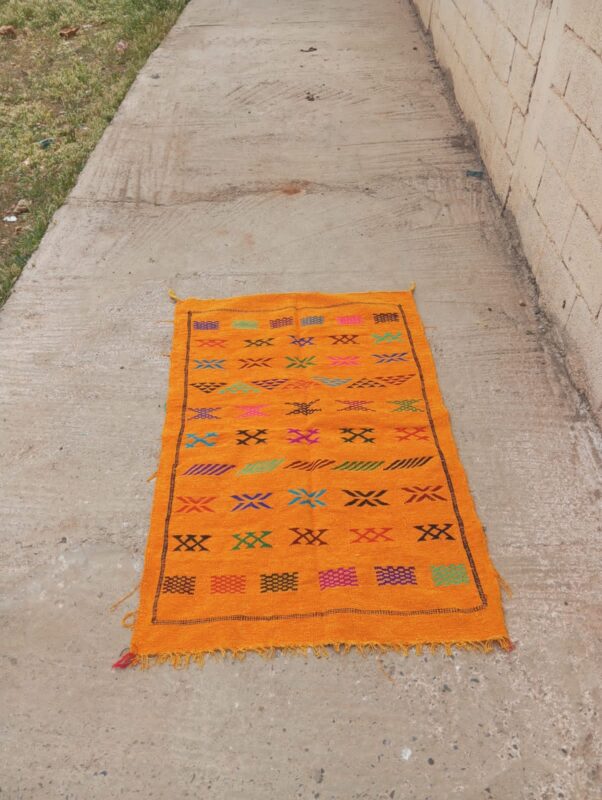
A kilim is woven on a loom by passing coloured weft threads over and under the vertical warp threads, packing them tightly together. There are no knots and no raised pile, which is why a kilim is flat, thin and usually reversible. Patterns are built up row by row: diamonds, zigzags, key borders and stripes appear as the weaver changes colour across the width of the rug.
Because every row is placed by hand, no two kilims are exactly alike. Small variations in line, colour and edge are part of the character of a handwoven piece, not a flaw.
Kilim or pile rug: what is the difference?
- Kilim (flat-woven): thin, light, reversible, easy to roll and move. Ideal for hallways, kitchens, bedsides and layering over larger rugs.
- Pile rug (knotted): thick and soft underfoot, heavier and warmer. Best as a large statement rug in living rooms and bedrooms.
Many homes use both: a soft pile rug under the sofa and kilim runners and mats in the busier, harder-working spaces.
Reading the colours and patterns
Moroccan kilims are known for confident colour. Saffron and red bring warmth to neutral rooms, royal blue and emerald green feel fresh and modern, and charcoal black gives a graphic, contemporary edge. Borders matter too: a key or zigzag border frames the rug and makes it read as a finished piece on bare floors.
Where to use a kilim
- Hallways and kitchens: a long, narrow runner adds colour and softens hard floors.
- Bedsides and entryways: a small mat is the easiest way to try a bold colour.
- Layered: place a kilim at an angle over a large neutral rug for a relaxed, collected look.
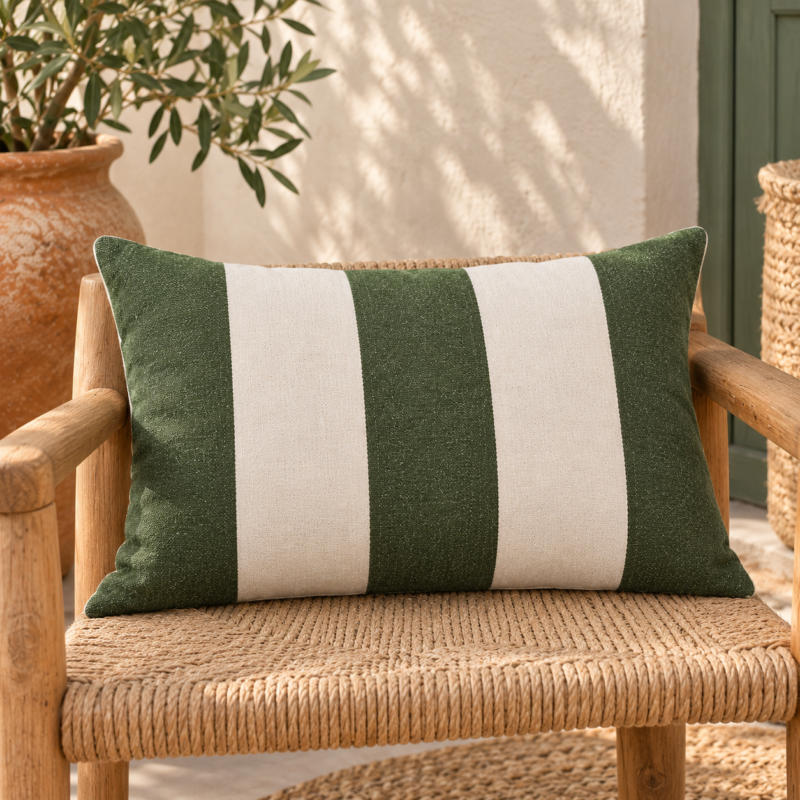
- Off the floor: kilims also work as wall hangings, bench throws and, of course, as pillow covers.
Caring for your kilim
- Shake it out or vacuum it gently on a low setting, without the beater bar.
- Blot spills straight away with a clean, damp cloth; do not rub.
- Turn it every few months so it wears and fades evenly.
- Use a thin non-slip underlay on smooth floors.
- For deep cleaning, choose a professional rug cleaner rather than a washing machine.
With a little care, a handwoven kilim will last for many years and only gets more beautiful with age.
Explore our collection: browse our handwoven Moroccan kilim rugs and runners, shipped from our Marrakech workshop to the USA, Canada, the UK, Europe and Morocco.
